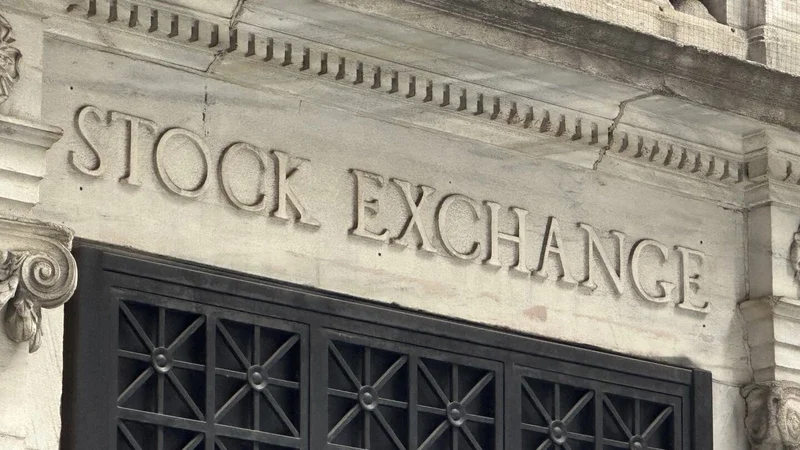
Decoding Wall Street's December Jitters: Is This More Than Just a Blip?
Wall Street's December started on a decidedly sour note, with the Dow, S&P 500, and Nasdaq all taking a hit. The Dow, in particular, took a beating, dropping over 550 points. Is this a sign of things to come, or just a temporary stumble before the year-end rally everyone's been predicting? The narrative being pushed is that it's all about interest rate cut anxieties and waiting for Nvidia's earnings. But let's dig deeper.
Nvidia: Hype or Harbinger? (Thiel vs. Buffett)
The Nvidia Factor: Hype vs. Reality Nvidia's earnings are undoubtedly a major event. The stock dipped nearly 2% based on news that Peter Thiel's hedge fund, Thiel Macro, dumped its stake. A $5 billion stake, mind you. That's not exactly a vote of confidence. The market is portraying this as a test of faith in Big Tech valuations and AI spending. But is Nvidia *really* the bellwether everyone thinks it is? I've seen this movie before. All eyes on one stock, while the broader market quietly shifts underneath. It's a good distraction. While everyone's obsessing over Nvidia, Berkshire Hathaway disclosed a nearly $5 billion stake in Alphabet. A rare tech play for Buffett, and a clear counter-narrative to the AI doom-and-gloom. Alphabet popped about 3% on the news. Smart money making a move, or a classic value investor getting caught up in the hype? I've looked at hundreds of these filings, and this particular juxtaposition — Thiel out, Buffett in — is unusual. It’s not just about AI; it’s about *which* AI bets are sustainable. It is, in effect, a wash.Chasing September Jobs Data in December: A Fool's Errand?
Jobs Data and Rate Cut Fantasies Then there's the jobs report. The delayed September jobs report, that is. We're heading into December, and the market is still fixated on *September's* numbers. That's like driving a car looking in the rearview mirror. The delay itself should be a red flag. What are they hiding? The market's pricing in a 45% chance of a rate cut, compared to 62% a week ago. The Fed's cautious tone is finally sinking in, but are investors truly grasping the implications? The RBA in Australia is in a similar position. Tony Sycamore from IG notes that the ASX200 has underperformed its global peers due to resurgent inflation curtailing the RBA's rate-cutting cycle. Are we seeing a global trend of central banks pumping the brakes on easing monetary policy? It certainly appears that way. The housing market is strong, driven by previous RBA rate cuts, strong migration, and favorable government policies. But Sycamore expects the RBA to remain "on hold" during the first half of 2026, meaning the impact of this year's cuts will fade. It's a sugar rush, not a sustainable growth model. The same pattern is playing out in the US. GDP growth in Australia’s major trading partners is expected to slow, which will lead to Australian GDP stabilising around 2 per cent YoY in 2026. And this is the part of the report that I find genuinely puzzling. The RBA expects trimmed mean inflation to be 3.2 per cent during the first half of 2026, before easing to finish the year lower at 2.7 per cent. The unemployment rate is expected to edge higher to 4.4 per cent, where it is forecast to remain throughout 2026 and all of 2027. Stagnant growth, persistent inflation, and rising unemployment. Stagflation, anyone? Bitcoin, meanwhile, is down from its early October peak. From a record high of over $126,000 to below $92,000 per token. That's a drop of about 27% — to be more exact, 27.77%. It's being framed as a health check for the crypto market, but it's also a symptom of broader risk aversion. Markets live update: Wall Street posts negative start to December, as Bitcoin continues to dive The Illusion of Stability The ASX200 is expected to reach the 9,300/9,500 target by the end of 2026. That's the prediction. But predictions are just that – predictions. Based on carefully selected data points and optimistic assumptions. The market is a complex, adaptive system, not a linear equation. To believe that the ASX200 will increase by approximately 8% over the next two years is a fool's errand. So, What's the Real Story? Wall Street's December jitters aren't just a blip. They're a sign that the market's built on shaky foundations: over-reliance on a few tech stocks, unrealistic rate cut expectations, and a general denial of the looming stagflationary environment. The narrative is that it's all temporary, but the numbers tell a different story. This isn't a dip to buy; it's a warning sign to heed.